
Table of Contents
- The Competitive Gap Is Already Open
- Customer Expectations Have Permanently Shifted
- Data Without AI Is Just Expensive Noise
- AI Adoption Is Rewriting the Rules of Marketing
- The Talent War Is Being Won by AI-Forward Companies
- Cybersecurity Threats Are Now AI-Powered Too
- Supply Chain Resilience Requires AI
- The Pricing Pressure Will Squeeze You Out
- AI Tools Small Businesses Can Start Using Today
- Industries Being Disrupted Fastest
- Your 5-Step AI Action Plan
- Frequently Asked Questions
Introduction
In 2005, a business without a website was considered eccentric. By 2010, it was losing customers. By 2015, it barely existed.
AI is following the same curve — only faster.
According to IBM’s Global AI Adoption Index, nearly 1 in 4 businesses still hasn’t adopted AI in any meaningful way. Meanwhile, companies that have fully integrated AI are compounding their advantages in cost, speed, and customer experience every single quarter.
This isn’t a technology story. It’s a survival story.
Businesses without AI aren’t just missing an efficiency upgrade — they are falling behind on every competitive dimension simultaneously: operational cost, marketing performance, customer experience, talent acquisition, and data intelligence. Each quarter of non-adoption makes the gap harder to close.
If you’re a business owner, marketer, or entrepreneur who has been watching AI unfold from the sidelines, this is the clearest possible signal: the sideline is now the losing position. Here’s exactly why — and what you can start doing this week.
1. The Efficiency Gap Is Already a Survival Gap for Businesses Without AI

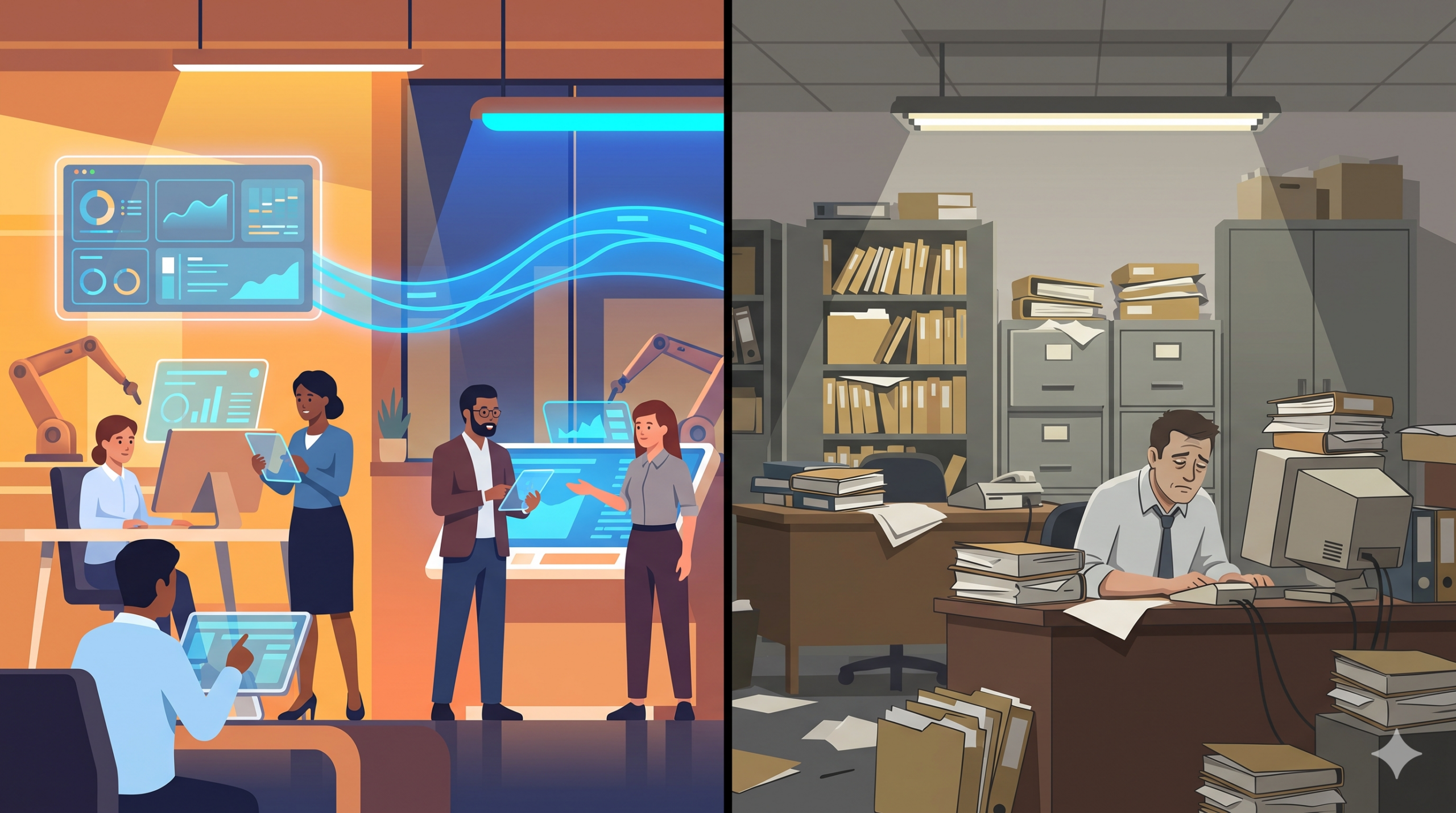
Here is the operational reality in 2026: AI-powered businesses run faster, leaner, and at significantly lower cost than businesses without AI — and the margin is widening every year.
Tasks that consume hours of human time in traditional businesses — manual invoicing, data entry, scheduling, campaign reporting, customer query handling — are automated entirely in AI-enabled operations. The time saved does not simply disappear; it is reinvested into growth, product improvement, and competitive positioning.
According to McKinsey’s State of AI Report (2024), companies that have fully adopted AI across core functions report:
- 20–30% reduction in operational costs
- 40% improvement in productivity across key departments
- Measurably faster time-to-market for new products and services
Now consider what it means to compete against a company spending 30% less than you to deliver the same — or a better — outcome. That is not a competitive disadvantage you can outwork. It is a structural gap that compounds over time.
Indian context: In India, Zepto built a 10-minute grocery delivery model that relies on AI-driven demand forecasting and dynamic route optimization at its core. Swiggy uses machine learning to predict order surges by locality before peak hours begin, allowing it to pre-position delivery partners. These are not Silicon Valley giants with billion-dollar R&D budgets. They are Indian companies that made AI infrastructure central to their business model from the start — and they are systematically outcompeting traditional players as a result.
You do not need to build on their scale. But you do need to start thinking at their level of operational intentionality.
Quick win: Tools like Zapier, Notion AI, and Make can automate your most time-consuming recurring tasks within a week, at zero or minimal cost. Start there.
2. Customer Expectations Have Permanently Shifted — AI Adoption Is Now the Baseline
Your customers no longer benchmark their experience against your direct competitor. They benchmark it against the best experience they have had — anywhere, with any brand, in the last 30 days.
That experience was almost certainly powered by AI.
Netflix surfaces exactly what a viewer wants before they consciously know they want it. Spotify generates playlists calibrated to mood and moment. Flipkart’s recommendation engine surfaces relevant products with a precision that generic catalogue browsing cannot touch. Amazon’s customer support resolves common queries in under 60 seconds, around the clock.
A Salesforce State of the Connected Customer Report (2023) found that 80% of customers now consider the experience a company provides to be as important as its products or services.
This is what customers now expect — and what businesses without AI cannot deliver:
| Customer Expectation | What AI Delivers | What Non-AI Businesses Deliver |
|---|---|---|
| 24/7 instant support | AI chatbots that resolve queries in seconds | Limited hours, delayed responses |
| Personalised recommendations | Machine learning that learns individual preferences | Generic, one-size-fits-all catalogues |
| Proactive service | Predictive analytics that anticipates needs | Reactive responses after problems arise |
| Seamless omnichannel | AI-driven integrations across every touchpoint | Fragmented, inconsistent experiences |
If your business cannot meet these expectations, customers will find one that can — and they will not return.
3. For Businesses Without AI, Data Is Just Expensive Noise
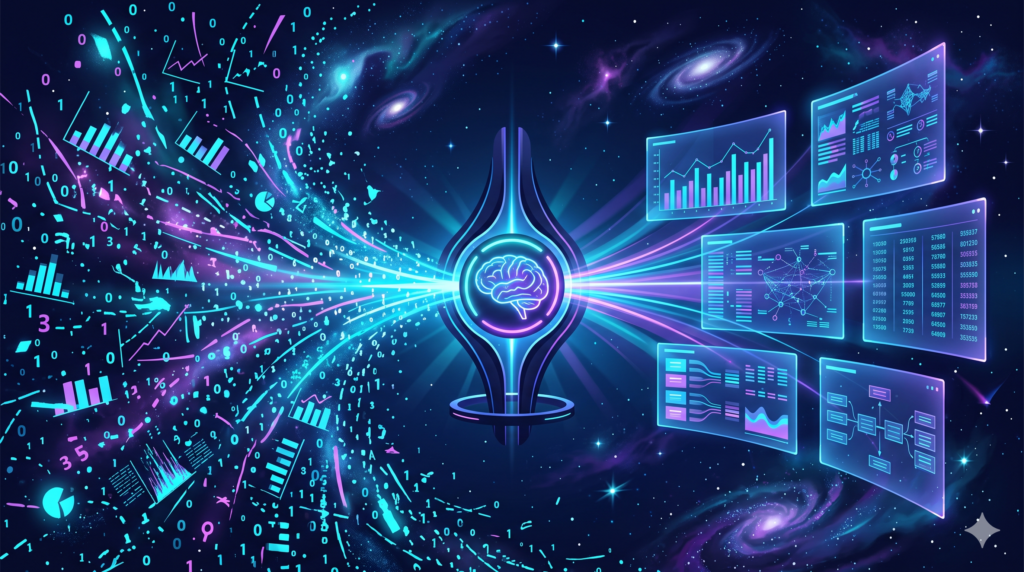
Every business generates data. Website traffic, purchase history, cart abandonment patterns, email engagement rates, support ticket themes, social media signals — the volume grows every month.
The problem is not a shortage of data. The problem is the absence of the capability to extract intelligence from it at any meaningful scale.
A skilled human analyst might require three to five days to identify a significant trend buried in a moderately complex dataset. An AI-powered analytics system surfaces that same trend in minutes — while simultaneously processing millions of data points across dimensions that no human analyst could monitor in parallel.
What AI-driven decision-making looks like in practice:
- Identifying customers who are statistically likely to churn — before they act on it
- Forecasting demand spikes at a SKU level so inventory is never over- or under-stocked
- Isolating your highest-margin customer segments automatically
- Optimising ad spend allocation in real time based on live performance signals
- Detecting seasonal micro-trends specific to your geography or category
What decision-making looks like without AI:
- Reacting to problems after they have already cost revenue
- Running campaigns based on intuition rather than behavioral evidence
- Discovering customer churn trends in a quarterly review, three months after the inflection point
Research from Google’s Think With Google consistently shows that data-driven organisations are significantly more likely to acquire and retain customers than their intuition-driven counterparts. The gap is not marginal — it is generational.
The future of AI in business is not about having more data. It is about having the capability to act on it before your competitors do.
4. Without AI Adoption, Your Marketing Will Become Invisible
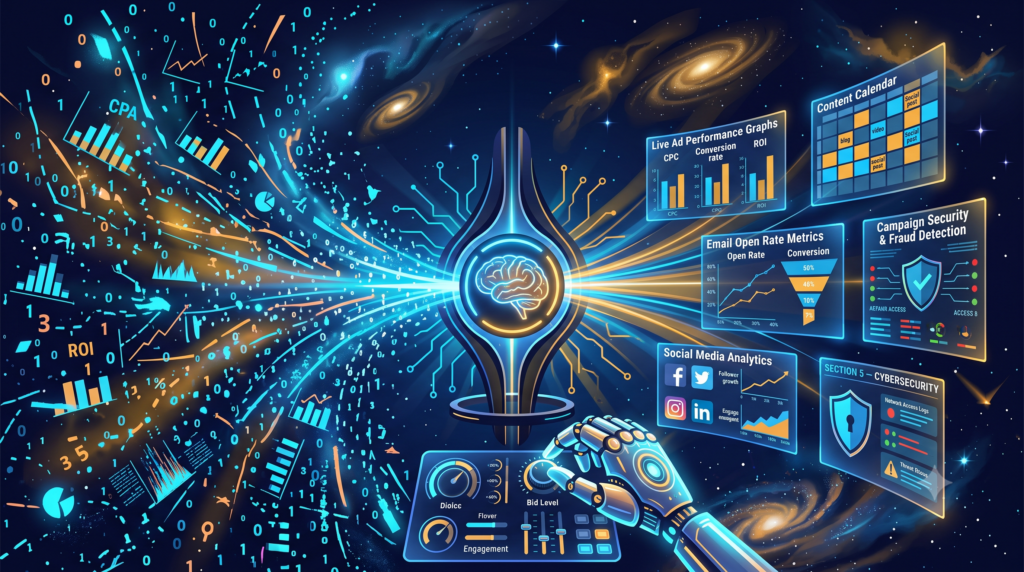
Marketing is the domain where AI business transformation is creating the widest competitive divides — and where the consequences of non-adoption are most immediately visible in revenue.
AI-powered marketing is not the future. It is the operational standard in 2026. Businesses without AI in their marketing stack are running slower, spending more, and converting less — against competitors who have automated the same functions.
Here is what AI-enabled marketers are executing right now:
Content production at scale. Tools like ChatGPT, Jasper, and Copy.ai allow marketing teams to produce blog posts, ad copy, email sequences, and social content at a speed that manual writing cannot approach. More importantly, they allow rapid iteration — testing ten headline variants in the time it previously took to write two.
Predictive lead scoring AI analyses behavioral data — pages visited, content downloaded, email engagement patterns — to predict which leads are closest to a purchase decision. Sales teams stop wasting cycles on cold prospects and concentrate their efforts where conversion probability is highest.
Programmatic advertising AI buys, places, and continuously optimises ad inventory automatically — ensuring every rupee of ad spend flows toward the highest-performing channels, audiences, and creative combinations in real time.
SEO and content optimisation Tools like Surfer SEO, Semrush, and Clearscope analyse top-ranking content and provide specific, actionable guidance on how to close the gap — eliminating the guesswork that characterised SEO a decade ago.
The net result: AI-powered marketers spend less per conversion, reach higher-intent audiences, and scale output without proportionally scaling headcount. Non-AI marketers work harder for diminishing returns against competitors who have automated the same functions.
If your competitor’s content is ranking higher, their ads are converting better, and their email sequences are generating more revenue — AI adoption is most likely the reason.
5. Why Businesses Need AI to Win the Talent War

Here is a dimension of AI adoption that most business owners do not consider until they have already lost candidates to it: the best talent in 2026 actively selects employers based on the sophistication of their tools and workflows.
The next generation of marketers, operators, and growth professionals does not want to spend their working hours on tasks that a machine can handle. They want to work at organisations where AI handles the repetitive work, and human intelligence is reserved for strategy, creativity, and judgment.
According to LinkedIn’s 2024 Workforce Report, job postings explicitly mentioning AI skills increased by over 300% in two years. The signal is clear: AI fluency has become a baseline professional expectation, not a specialist credential.
For businesses without AI, the talent implications are severe:
- Top candidates self-select out of organisations perceived as operationally behind
- Existing team members burn out on manual tasks that AI could handle in minutes
- Competitors offering better tools and more intelligent workflows attract and retain better people
- Your employer brand signals stagnation to the exact talent pool you most need to reach
Beyond recruitment, AI also transforms talent management internally. AI-powered onboarding systems personalise training for each new hire based on role and learning pace. Sentiment analysis tools surface early indicators of employee dissatisfaction before resignations occur. Performance analytics reduce the subjectivity that distorts traditional review processes.
The organisations winning the next decade will be those that make AI adoption a talent strategy, not just a technology strategy.
>
6. Cybersecurity: AI-Powered Threats Require AI-Powered Defences
This is the section most business owners skip — and the one most likely to cause the greatest financial damage.
Cybercriminals are using AI too. AI-generated phishing emails are now nearly indistinguishable from legitimate communication. Deepfake technology can convincingly impersonate senior executives in video calls. Automated systems probe thousands of security vulnerabilities simultaneously, identifying exploitable weaknesses faster than any human security team can respond manually.
According to IBM’s Cost of a Data Breach Report 2024, the average cost of a data breach globally reached $4.88 million. More significantly, companies using AI-powered security tools saved an average of $1.76 million per breach compared to those without.
Without AI security tools, businesses face:
- An average of 277 days to identify and contain a breach
- Significantly higher remediation costs
- Elevated risk of customer data exposure and the reputational consequences that follow
- Regulatory penalties under data protection frameworks
With AI-powered security, organisations gain:
- Real-time anomaly detection that identifies threats as they emerge
- Automated incident response that contains breaches in minutes rather than months
- Predictive vulnerability analysis that patches weaknesses before they are exploited
A common misconception among small and medium business owners is that their scale makes them an unattractive target. The opposite is true. SMBs are disproportionately targeted precisely because they typically lack enterprise-grade security infrastructure. AI levels the playing field — and in cybersecurity, not playing is not a neutral position.
7. Supply Chain Resilience Is a Direct Function of AI Adoption

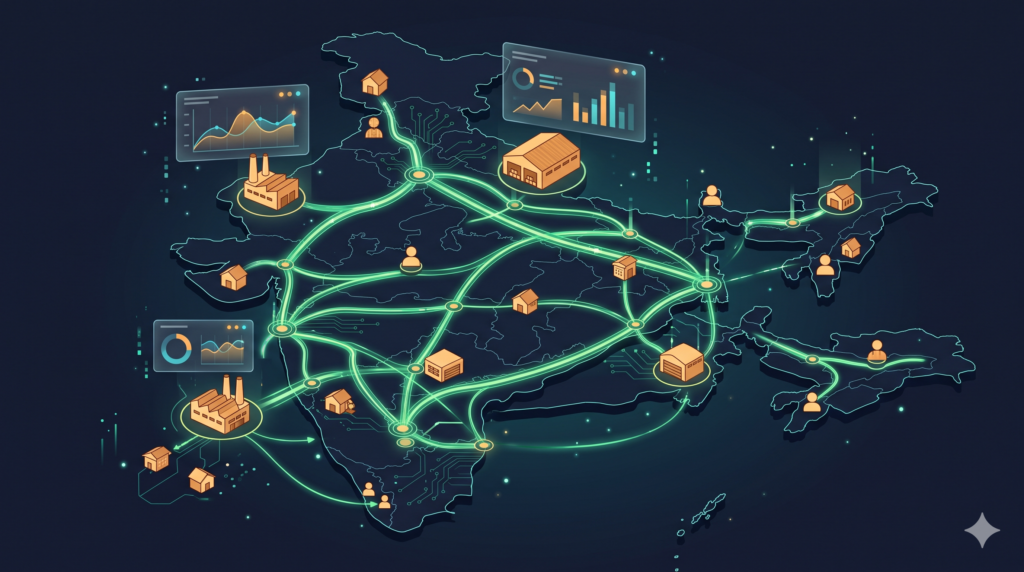
The supply chain disruptions of the early 2020s exposed a structural vulnerability that has not gone away: businesses operating without predictive intelligence are perpetually reactive, absorbing the full cost of disruptions that AI-enabled competitors anticipated and mitigated in advance.
AI is transforming supply chain management through several specific capabilities:
- Demand forecasting that routinely achieves 90–95% accuracy at the SKU level
- Real-time inventory optimisation that prevents both overstocking and stockouts simultaneously
- Supplier risk assessment that flags potential disruptions — geopolitical, logistical, financial — before they materialise
- Delivery route optimisation that reduces last-mile costs and improves predictability
Global organisations, including Walmart, Unilever, and Maersk, have built AI-native supply chains that respond to disruptions dynamically rather than reactively. In India, logistics platforms like Delhivery and Porter have embedded AI-driven route intelligence into their core operations, creating structural cost advantages over traditional logistics competitors.
Businesses without AI in their supply chain are, in the most literal sense, flying blind. They will react to problems after they occur — and in a market where customers increasingly expect same-day or next-day fulfilment, that reactive posture translates directly to lost orders and eroded loyalty.
8. The AI Business Transformation in Pricing Will Squeeze Non-AI Businesses Out
This is the economic mechanism that should concern every business owner most directly.
AI-powered businesses have structurally lower operating costs. Lower costs create two strategic options: offer lower prices to acquire market share, or maintain prices and reinvest the margin differential into growth. Either path creates an accelerating competitive advantage.
Consider a competitor that has deployed AI to:
- Automate first-line customer support (saving ₹15–20 lakh annually in labour costs)
- Optimise ad spend allocation (generating 35–40% better return on the same budget)
- Predict demand accurately enough to reduce inventory waste by 20–25%
- Streamline back-office operations enough to cut overhead by 15%
That competitor can simultaneously undercut your pricing and outspend you on customer acquisition. You cannot cut costs manually fast enough to match a system that optimises continuously and autonomously.
This dynamic is already playing out in Indian e-commerce, edtech, fintech, and D2C categories — sectors where AI-native startups are competing directly with established businesses that carry the operational overhead of pre-AI workflows.
The margin squeeze is not coming. For many industries, it is already here.
9. AI Tools for Small Business: Affordable, No-Code, and Available Now
The most persistent misconception holding small businesses back from AI adoption is the belief that it requires enterprise budgets, technical teams, or complex infrastructure.
It does not.
The most impactful AI tools for small businesses in 2026 are affordable (many are free or under ₹2,500/month), require no coding knowledge, and integrate directly with tools most businesses already use. The barrier to entry has effectively disappeared.
AI tools small businesses can implement this week:
| Business Function | AI Tool | Monthly Cost |
|---|---|---|
| Content writing | ChatGPT / Jasper | Free – ₹4,000 |
| Email marketing | Mailchimp AI | Free – ₹1,500 |
| Social media | Buffer AI / Hootsuite | Free – ₹4,000 |
| Customer support | Tidio / Intercom | Free – ₹3,000 |
| SEO optimisation | Surfer SEO / Semrush | ₹4,000 – ₹10,000 |
| Design | Canva AI / Adobe Firefly | Free – ₹2,500 |
| Accounting | QuickBooks AI | ₹1,200 – ₹2,500 |
| Task automation | Zapier / Make | Free – ₹1,500 |
The objective is not to implement all of these simultaneously. It is to identify the single function where manual effort is costing the most time or producing the most errors, and automate that function first. Every tool mastered creates compounding returns.
10. The Industries Being Hit Hardest by AI Business Transformation
While every sector will feel the pressure of AI adoption, the disruption is not uniform. These industries are experiencing the steepest competitive bifurcation between AI-adopting and non-adopting businesses:
Retail and E-Commerce AI-powered recommendation engines account for up to 35% of revenue at major e-commerce platforms (McKinsey, 2023). Businesses without personalisation infrastructure lose customers at the discovery stage — before the purchase decision is even made.
Healthcare AI diagnostic tools, automated patient scheduling, and administrative automation are becoming standard at clinics and hospitals that want to remain financially viable. Practices without AI face higher administrative overhead and slower service delivery.
Finance and Banking AI fraud detection, automated credit underwriting, and intelligent financial planning tools are the baseline expectations at modern financial institutions. Traditional firms are losing younger customers to fintech alternatives that deliver superior AI-powered experiences.
Manufacturing Predictive maintenance systems powered by AI reduce unplanned downtime by up to 50% (Deloitte, 2023). Manual maintenance schedules simply cannot match the precision of systems that monitor equipment health continuously.
Education Adaptive learning platforms that personalise content for each student are driving measurable improvements in outcomes. Traditional one-size-fits-all delivery is losing enrolment to alternatives that meet students where they are.
Legal Services AI contract review and legal research tools perform in minutes what junior associates take hours to complete. Firms that do not adopt AI face billing pressure from clients who are increasingly aware of what these tasks should cost.
11. Your 5-Step AI Adoption Plan — Start This Week
AI adoption does not require a complete business overhaul or a specialist technical team. It requires sequenced, deliberate action starting from where you are right now.
Step 1: Audit your most time-consuming repetitive tasks. List every task in your business that is repetitive, rule-based, or could be described to someone else as a process with defined steps. These are your immediate AI automation candidates.
Step 2: Choose one function and start there. Do not attempt to automate everything simultaneously. Select one area where the time cost or error rate is highest:
- Customer queries → AI chatbot (Tidio, Intercom)
- Content creation → AI writing tools (ChatGPT, Jasper)
- Campaign reporting → AI analytics (Semrush, Google Analytics Intelligence)
Step 3: Select the right tool and implement it. Use the table above as a starting point, or explore detailed, India-relevant tool reviews at Ride to AI’s AI tools section to find the right fit for your specific business function and budget.
Step 4: Measure the impact before expanding. Establish a baseline before you deploy — how long the task currently takes, what the error rate is, what the output volume is. After 30 days, measure against that baseline. Use the evidence to justify expanding AI adoption to the next function.
Step 5: Build an AI-first culture across your team. Document what works. Share efficiency wins internally. Train team members on the tools that are working. AI adoption that lives with one person is a tool. AI adoption that lives across an organisation is a competitive advantage.
Frequently Asked Questions: Businesses Without AI
Will small businesses really be affected if they don’t adopt AI? Yes — and arguably more acutely than large enterprises. Small businesses operate on thinner margins and have less capacity to absorb efficiency gaps. When a competitor automates customer support and reduces response time from 8 hours to 2 minutes, the smaller business without AI loses customers at a rate it cannot easily detect until significant damage has occurred.
How much does it actually cost to implement AI for a small business in India? Many foundational AI tools are available on free tiers. ChatGPT, Canva AI, and Mailchimp AI all offer meaningful functionality at no cost. Paid plans for most tools start between ₹1,000–₹4,000 per month — significantly less than the cost of the manual labour hours they replace. The cost of not adopting AI, measured in lost efficiency and lost customers, far exceeds any subscription expense.
Which AI tools should an Indian small business start with in 2026? Start with the function that costs the most time: if it is content creation, begin with ChatGPT or Jasper. If it is customer service, start with Tidio. If it is marketing campaigns, begin with Mailchimp AI or Buffer. One tool, implemented properly and measured rigorously, compounds faster than five tools used inconsistently.
Is AI adoption only relevant for technology companies? No. Retail, healthcare, logistics, education, legal services, and manufacturing are seeing some of the highest measurable ROI from AI adoption. Any business with repetitive processes, customer interactions, or data to interpret can generate immediate value from the right AI tools.
What is the biggest mistake businesses make when adopting AI? Trying to do too much at once. Businesses that attempt to automate multiple functions simultaneously often end up with tools that are partially implemented, improperly measured, and eventually abandoned. The highest-return approach is sequential: one function, properly implemented and properly measured, before moving to the next.
The Bottom Line
The businesses that will define their industries over the next five years will not necessarily be the ones with the largest budgets or the longest track records.
They will be the ones that recognised the AI inflection point early enough to act on it — and built operational, marketing, and customer experience capabilities that compound with every passing quarter.
Businesses without AI are not standing still. In a market where their competitors are accelerating, they are falling behind by the day. The gap is real, it is measurable, and it grows harder to close the longer action is deferred.
The best time to start was two years ago. The second-best time is right now.
Explore More on Ride to AI
At Ride to AI, we break down AI tools, strategies, and news specifically for Indian business owners, marketers, and entrepreneurs — without the technical jargon.
- Explore AI tools by business function and budget
- Read beginner-friendly AI tutorials
- Follow the latest AI news relevant to Indian businesses
If this article gave you clarity on where to start, share it with a fellow business owner who needs to hear it. The most valuable thing you can do with this information is act on it — starting this week.
Published on Ride to AI — AI tools, news, and strategies for the next generation of Indian businesses.